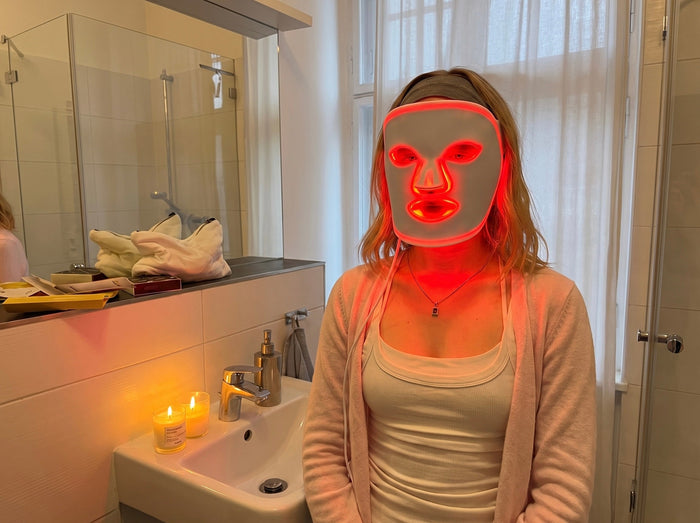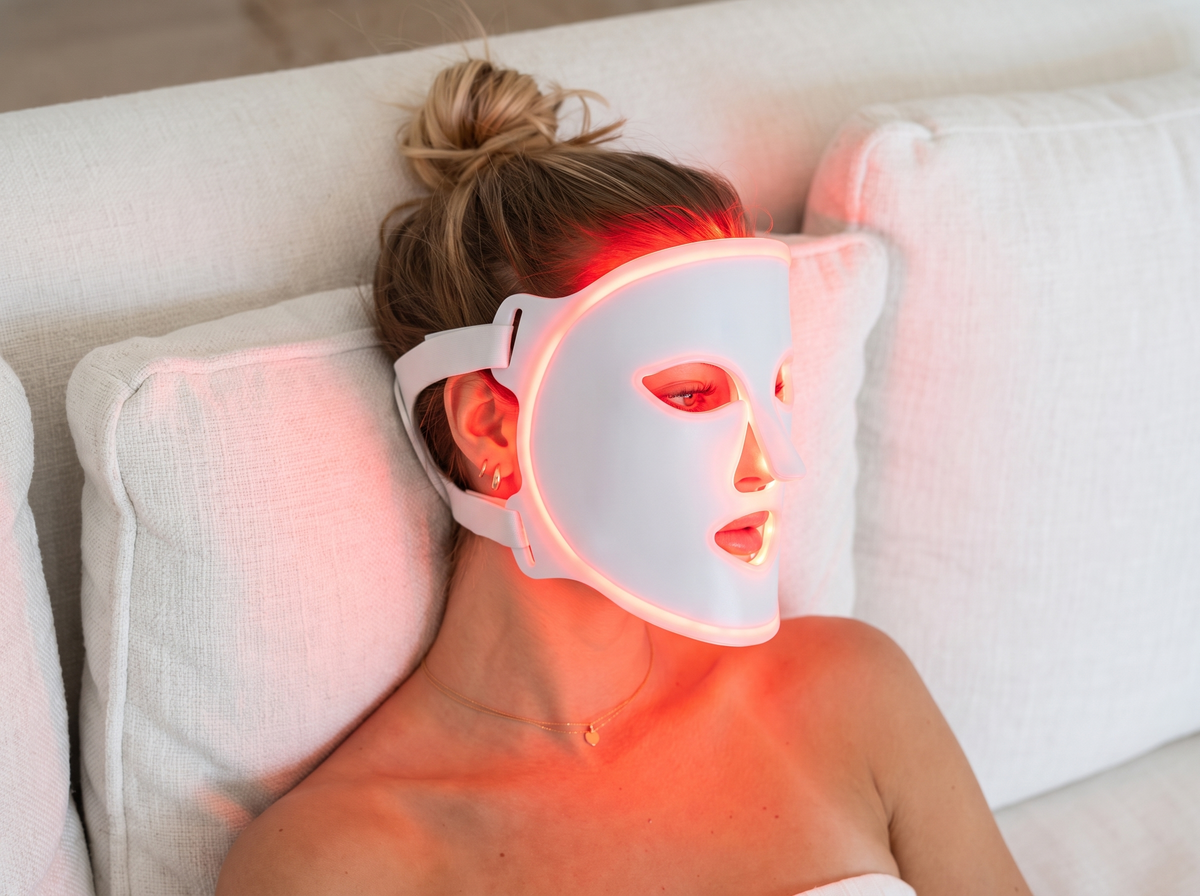
You've seen the before and afters. You've heard people describe it as looking like they "just got back from holiday" or "slept really well for a month straight." But if you've ever wondered what's actually happening under the surface when you sit behind a red light therapy mask — here's the real answer.
Spoiler: it's not magic. It's actually more interesting than that.
Your Skin Has an Energy Problem
Here's something most people don't know: as we age, our skin cells become less efficient. Not broken — just slower. They produce less collagen, repair themselves more sluggishly, and circulate nutrients less effectively. The result isn't dramatic overnight. It's gradual. A slow dimming of the glow you used to have without trying.
Red light therapy for skin works by addressing that energy problem directly. When red light wavelengths (630–660nm) penetrate the skin, they're absorbed by the mitochondria — the part of your cells responsible for producing energy. The cells wake up. They start functioning the way they did when they were younger.
That's the foundation everything else builds on.
What's Actually Happening: The Three Mechanisms
1. Collagen production switches back on
Collagen is what keeps skin firm, plump, and smooth. You have less of it every year after your mid-twenties — about 1% less per year, accelerating after 30. Red light therapy for skin rejuvenation works by stimulating the cells responsible for building collagen and elastin back up. Research published in the Journal of the American Academy of Dermatology confirmed that collagen, elastin, and hyaluronic acid synthesis all increased in human skin cells exposed to red and infrared light — in as little as 3 days of treatment.
JAAD study — collagen, elastin, and hyaluronic acid synthesis increased in human skin cells within 3 days of red and infrared light exposure.
PMC (2023) — two sessions per week for 3 months produced significant improvements in skin morphology, including increased dermal thickness and stimulated epidermal renewal.
2. Circulation improves — and your skin shows it
Stanford Medicine's research on red light therapy identified vasodilation — the widening of blood vessels — as one of its key mechanisms. More blood flow means more oxygen and nutrients reaching your skin cells. It also means your body flushes out cellular waste more efficiently. The result is that lit-from-within glow that's hard to fake with products.
This is also why your skin looks warmer and more radiant immediately after a session, even before the long-term collagen results kick in.
3. Inflammation quietly calms down
Chronic low-grade inflammation — from stress, pollution, sun exposure, poor sleep — is one of the main reasons skin looks dull and uneven. Red light has well-documented anti-inflammatory properties. It calms redness, reduces puffiness, and creates a better environment for your skin's natural repair processes to work without interruption.
Less inflammation means more even tone. More even tone means that effortless glow people keep asking you about.
Here's Why You Might Be Skeptical — And Why That's Valid
Let's be honest about something. Red light therapy has a marketing problem.
It's been oversold. Wellness influencers have claimed it fixes everything from wrinkles to joint pain to sleep to period cramps — and when something promises everything, it's reasonable to trust nothing. Search volume for red light therapy grew 118% after it went viral on TikTok in early 2024. That kind of hype always attracts exaggeration.
Here's what the science actually says, without the spin:
Dr. David Ozog, chair of dermatology at Henry Ford Health and contributor to a 2025 consensus review on red light therapy, puts it plainly: the results for skin are real, but modest compared to more aggressive treatments like laser peels or retin-A. He's not dismissing it — he's contextualising it. Red light therapy is not a shortcut. It doesn't replace dermatology. What it does is give your skin a genuine, low-intervention boost that compounds over time.
The skepticism is valid. The overclaiming is real. But the mechanism — light stimulating cellular energy production, collagen synthesis, and circulation — is documented in peer-reviewed research, not just brand copy.
The honest version: it works. Just not overnight, not dramatically, and not instead of everything else. As part of a consistent skincare routine, the evidence is solid.
Why the Glow Looks Different From Everything Else
There are lots of ways to look glowing. A highlighter. A facial. A really good night's sleep. But most of them are surface-level or temporary — the light bounces differently off your skin for a few hours and then it fades.
The glow from red light therapy is structural. You're not reflecting light better. Your skin is actually producing more collagen, circulating more efficiently, and repairing itself more effectively. The results don't wash off because they're not sitting on the surface.
Six months after completing structured red light therapy treatments, participants in one long-term follow-up study still showed significant improvements in skin feeling, complexion, and collagen levels. That's not a temporary fix. That's your skin genuinely functioning better than it was before.
The One Thing That Determines Whether It Works
None of this happens from a single session. The mechanism is real, the science is solid — but the results are cumulative. Your skin needs repeated light exposure to keep collagen production elevated and circulation improved.
Think of it less like a treatment and more like training. You don't do one workout and stay fit. You build the habit, and the results compound over time.
Three to five sessions a week. Clean skin. The right wavelengths. That's the whole formula.
The Glowing Lumé mask delivers 630–660nm red light and 830–850nm near-infrared light — the wavelengths the research actually points to. Fifteen minutes, consistent evenings. Discover the Lumé mask →