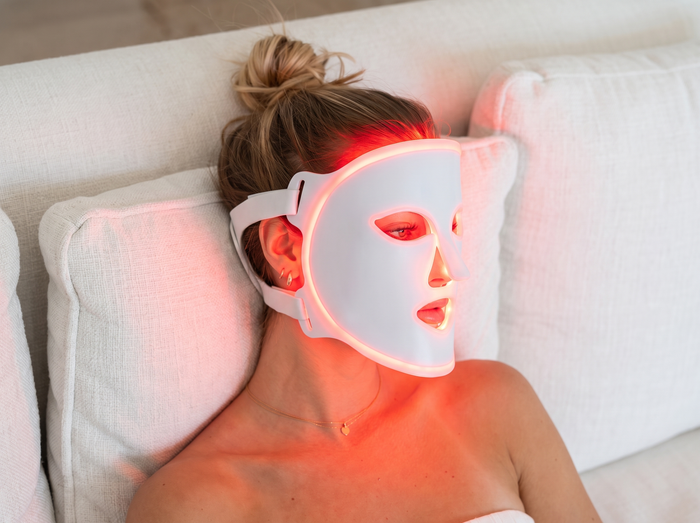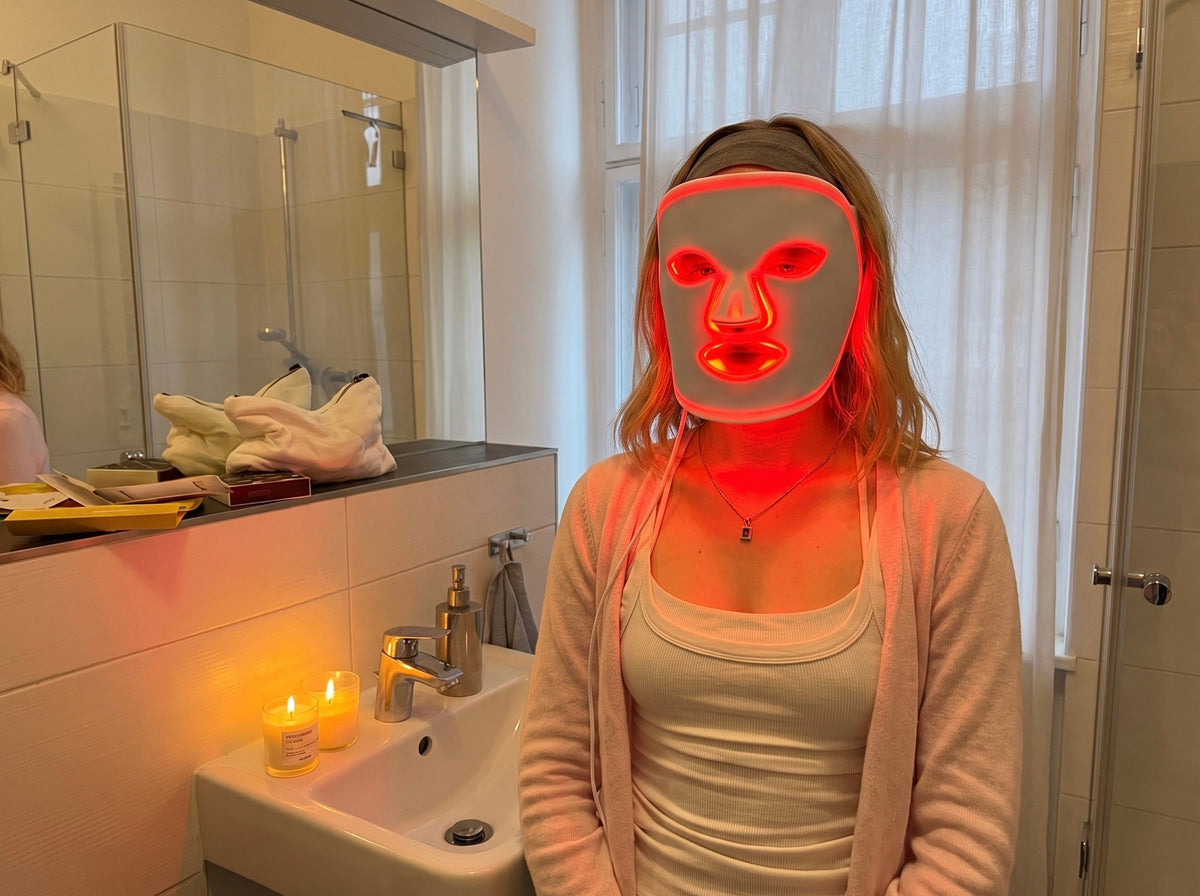
Here's what nobody tells you when you buy a red light therapy mask: the first two weeks are going to feel like nothing is happening. That's normal. That's actually the whole point.
Red light therapy isn't a serum you layer on and see results from overnight. It's a process that works at a cellular level — which means the results build quietly under the surface before they show up in the mirror. Understanding that timeline is the difference between giving up too early and giving it long enough to actually work.
Here's a real, week-by-week breakdown of what's happening to your skin — what you'll notice, what's happening underneath, and when to expect what.
First, Why Timing Even Matters
Red light therapy works by penetrating below the surface of your skin and stimulating your cells at the mitochondrial level — basically waking up your skin's natural collagen and elastin production. More collagen means firmer, plumper, more radiant skin over time. The catch is that biology runs on its own schedule.
The science backs this up.
Wunsch & Matuschka (2014) — 136 subjects, twice weekly sessions, statistically significant increases in collagen density confirmed by ultrasound.
Barolet et al. — split-face study, 90%+ showed reduced wrinkle depth, 87% improved on the Fitzpatrick wrinkling severity score after 12 treatments.
Neither result happened in a week. Just consistent light, doing what it's designed to do.
Week 1–2: The Subtle Shift
Don't expect transformation. What you'll likely notice in the first couple of weeks is more subtle — a slightly warmer, fresher quality to your skin right after sessions. Some people describe it as looking like they've had a really good night's sleep.
What's actually happening: red light increases circulation and starts stimulating cellular activity. A study published in the Journal of the American Academy of Dermatology found that gene expression of collagen, elastin, and hyaluronic acid increased in human skin within just one week of red and infrared light exposure. The structural work has started — it's just not visible yet.
This is also the window where a lot of people give up. Don't.
Week 3–4: Something's Different
Around week three, most people start noticing something they can't quite articulate. Their skin looks more even. A bit brighter. The dullness that was just kind of always there is less obvious. You start looking like someone who takes care of themselves — even if nothing else changed.
This is collagen remodeling beginning to show up at the surface. Your skin's texture is starting to change — not dramatically, but genuinely. If you've been taking photos (worth doing), this is usually when you start seeing a difference between week one and now.
Your skin is also more receptive to the products you're applying after your sessions. The warmth and increased circulation post-mask means serums and moisturisers are absorbing better than they normally would.
Week 4–8: This Is Where It Gets Good
If you've been consistent — sessions four to five times a week, clean skin before, full routine after — weeks four through eight are when most people start getting unsolicited comments.
You look really well lately. Are you doing something different?
Clinical studies back this up. Research shows that with 3–5 sessions per week, most users see measurable improvements in skin tone, texture and visible fine lines between weeks four and eight. The collagen your body has been quietly building starts showing up as actual firmness. The kind that doesn't wash off.
This is also when the habit tends to lock in — because you're getting visible feedback, and visible feedback makes consistency feel effortless rather than disciplined.
Week 8–12: The Real Glow
By the three-month mark, you're looking at accumulated results rather than incremental ones. A controlled study using twice-weekly LED mask treatments found visible signs of skin aging decreased significantly after one to three months — with participants showing reduced wrinkle depth, improved skin smoothness, and measurably better skin elasticity.
The glow at this stage is different from week two. It's not the post-session warmth. It's structural — your skin genuinely looks different because it is different. More collagen, better elasticity, more even tone. The kind of skin that just looks like yours, but better.
What Actually Affects Your Timeline
A few things that move the needle faster — or slower:
Consistency matters more than duration. Three 10-minute sessions a week, every week, will outperform two 20-minute sessions whenever you remember. The skin responds to regular, repeated exposure. It doesn't save up missed sessions.
Your skin before you start. Skin that's more depleted — from stress, poor sleep, sun damage — often shows faster visible improvement in the early weeks, because it has more to respond to.
What you do after your session. Your skin is genuinely more receptive immediately post-mask. A good moisturiser or serum applied right after will absorb more effectively than it would otherwise.
Device quality. A mask with inadequate light intensity will give you the ritual without the results. What matters is that the wavelength is right (630–660nm for red light, 830–850nm for near-infrared) and that the device delivers enough power density to actually reach the dermis.
The Honest Answer
Most people notice something real in the first month. Most people see meaningful results by month two. And at three months of consistent use, most people aren't asking whether it's working — they already know.
The results from red light therapy don't arrive all at once. They accumulate. And that's actually the best kind of result — the kind that builds into your baseline rather than fading after a few days.
If you're looking for something that works overnight, this isn't it. But if you're building a routine that actually changes how your skin looks six months from now, red light therapy is one of the most evidence-backed tools you can add to it.
The Glowing Lumé mask is designed for exactly this kind of long game. Fifteen to twenty minutes, clean skin, consistent evenings. That's the whole thing. Discover the Lumé mask →